MODG senior Maria McDonough shares her experience playing camogie, the female version of Ireland’s national sport hurling. Growing up in Ireland, Maria recalls how camogie was one of those sports you “just did”. Yet over the years she has realized that camogie has been much more than simply the sport everyone played–it became the sport which helped build and improve her as a person.
- How long have you been homeschooled?
I’ve been homeschooled my entire life! It’s the only way I’ve ever known, and it’s been a really great experience growing up.
- How long have you been in MODG?
I’ve been with MODG since 2nd grade, so it’s been about ten years now!
- How would you describe camogie?
I’d describe it as an incredibly fast, high skill, and physical game. It’s basically the female version of hurling, played with a hurl and a sliotar, and it’s easily one of the quickest field sports out there. It’s all about speed and coordination, but there’s a really great team spirit to it, too.
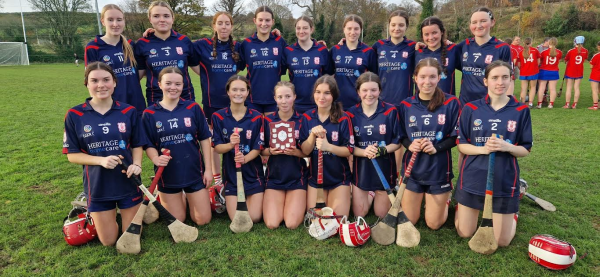
With the shield final award (Maria is the second to last on the top right)
- What team do you play for? Do you play any other sports?
I play for Cuala [k-oo-la] GAA, and I also play Gaelic football for them.
- How long have you been playing camogie? Why did you start?
I’ve been playing since I was five years old. Growing up in an Irish family, it was just one of those things you did. It was part of the culture and the weekly routine. I started out with BSJ [another team], but once I moved to my current area around age 7 or 8, I joined Cuala. Over the years, it stopped being just a family thing and became something I genuinely love. There’s a certain speed and intensity to the game that you don’t really find anywhere else, and that’s what has kept me hooked for the last 13 years.
- How does playing both Gaelic football and camogie help your game?
They definitely help each other. The hand eye coordination from camogie makes your ball handling and catching in football a lot sharper. At the same time, the fitness and running from football give you the engine you need for camogie. Playing both just makes you a more balanced athlete.
- What position do you play in camogie?
I play half wing forward. It’s a high workrate position because you’re basically the link between the backs and the full forward line. I like it because you’re always involved in the play and moving the ball up the pitch, but you still get plenty of chances to score.
- Is it hard being a homeschooler on your team?
It really hasn’t been. At first, you’re just the new person like anyone else, and once you’re on the pitch, nobody cares where you go to school. I’ve been with the club since I was so young that I’ve grown up with most of these girls. We’ve gone through seasons and matches together for years, so the bond is just based on being teammates.
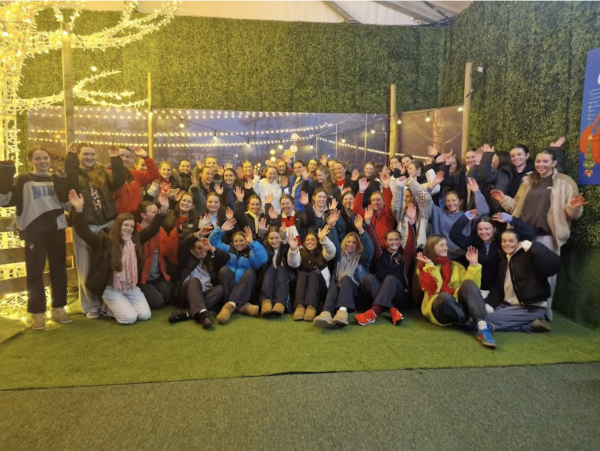
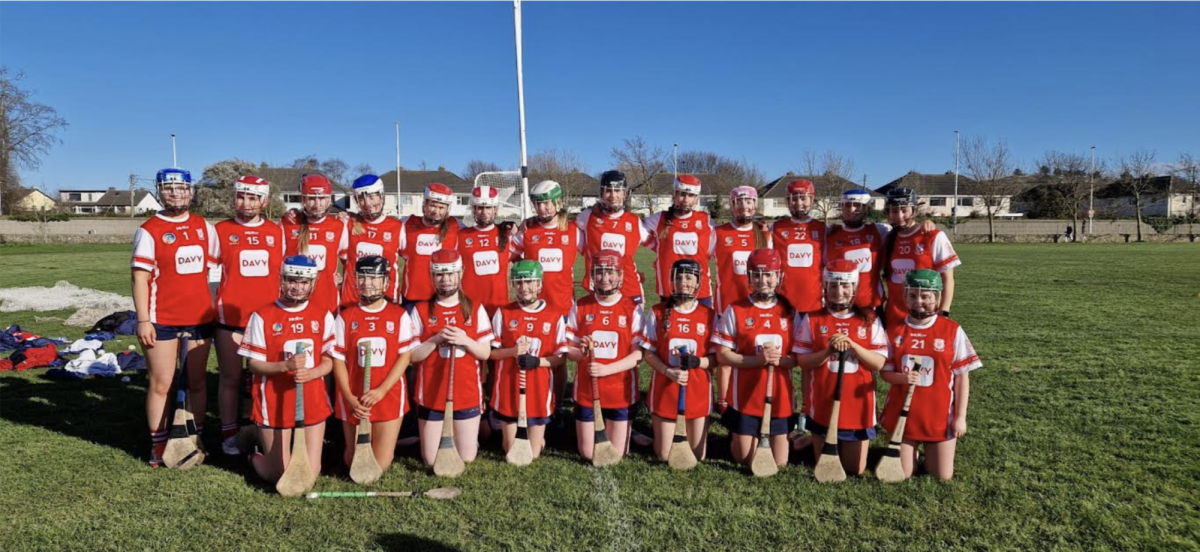
Maria with her team at the Minor’s Christmas Gathering
- What have been your biggest accomplishments?
For me, it’s not really about trophies. I think my biggest accomplishment has been stepping out of my comfort zone and sticking with the sport through different transitions, like moving out of juvenile up into the minor and adult team. It takes a lot of confidence to put yourself out there in a high intensity environment, especially when life gets busy. Just showing up, improving my skills, and being a reliable teammate is what I’m most proud of.
- What have been your biggest challenges?
The biggest challenge is definitely the balancing act. There are definitely evenings when I’m tired and it would be easier to just stay home, so finding the discipline to show up and manage my time has been a big learning curve. Also, just the jump in intensity as you get older. You have to be much more focused and physically ready than when you’re younger.
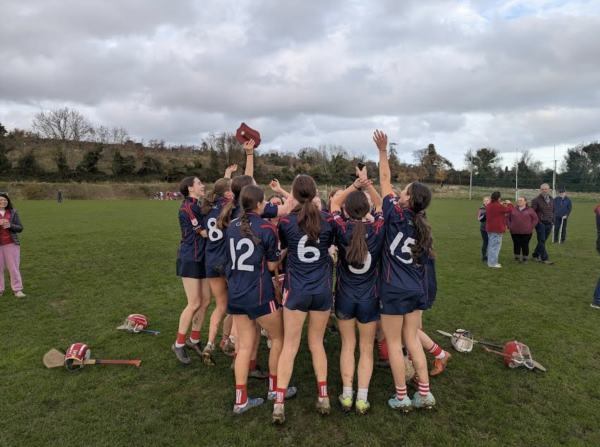
After winning the shield final
- What is your favorite part of camogie?
The best part is definitely the team spirit. There’s a specific buzz on match days that you don’t get anywhere else, and the friendships you make on the pitch are really solid because you’re all working hard together. Also, nothing beats the feeling of a clean strike on the ball!
- What is your least favorite part of camogie?
Probably training in the freezing rain and wind during the winter months. It’s hard to get motivated when the weather is miserable, but you usually feel better once the session actually starts.
- How long do you spend practicing a week? Is it a big commitment?
It varies depending on the time of year, but right now I’m at the peak of the league season, so I’m doing about 8 hours a week between training and matches. It’s definitely a big commitment, especially in my senior year, but because I’ve been doing it so long, it’s just a normal part of my week. It actually helps me stay disciplined with my schoolwork.
- What, or who, has been your main motivation?
My main motivation has definitely been my family and the community I’ve grown up in; seeing people stay dedicated to the sport for years really inspired me to keep going. I’m also motivated by my teammates: when you see everyone else working hard at training, it makes you want to push yourself more. It’s that feeling of not wanting to let the team down that keeps me focused, even on the days when I’m tired.
- What have you learned over the years of playing your sport?
I’ve learned a lot about resilience. In sports, things don’t always go your way, you might lose a game or have a bad training session, but you learn how to pick yourself up and go again the next day. It’s definitely taught me a ton about discipline and time management.
- What advice would you give someone else playing camogie, or any sport in general?
My biggest advice is just to stick with it, even when it gets tough or you feel like you aren’t at your best. There will be seasons where you’re tired or your schedule is packed, but the friendships and the confidence you gain are so worth it. Also, don’t be afraid to step out of your comfort zone, whether that’s joining a new club or stepping up to a new age group. That’s usually where you grow the most as a player and a person.