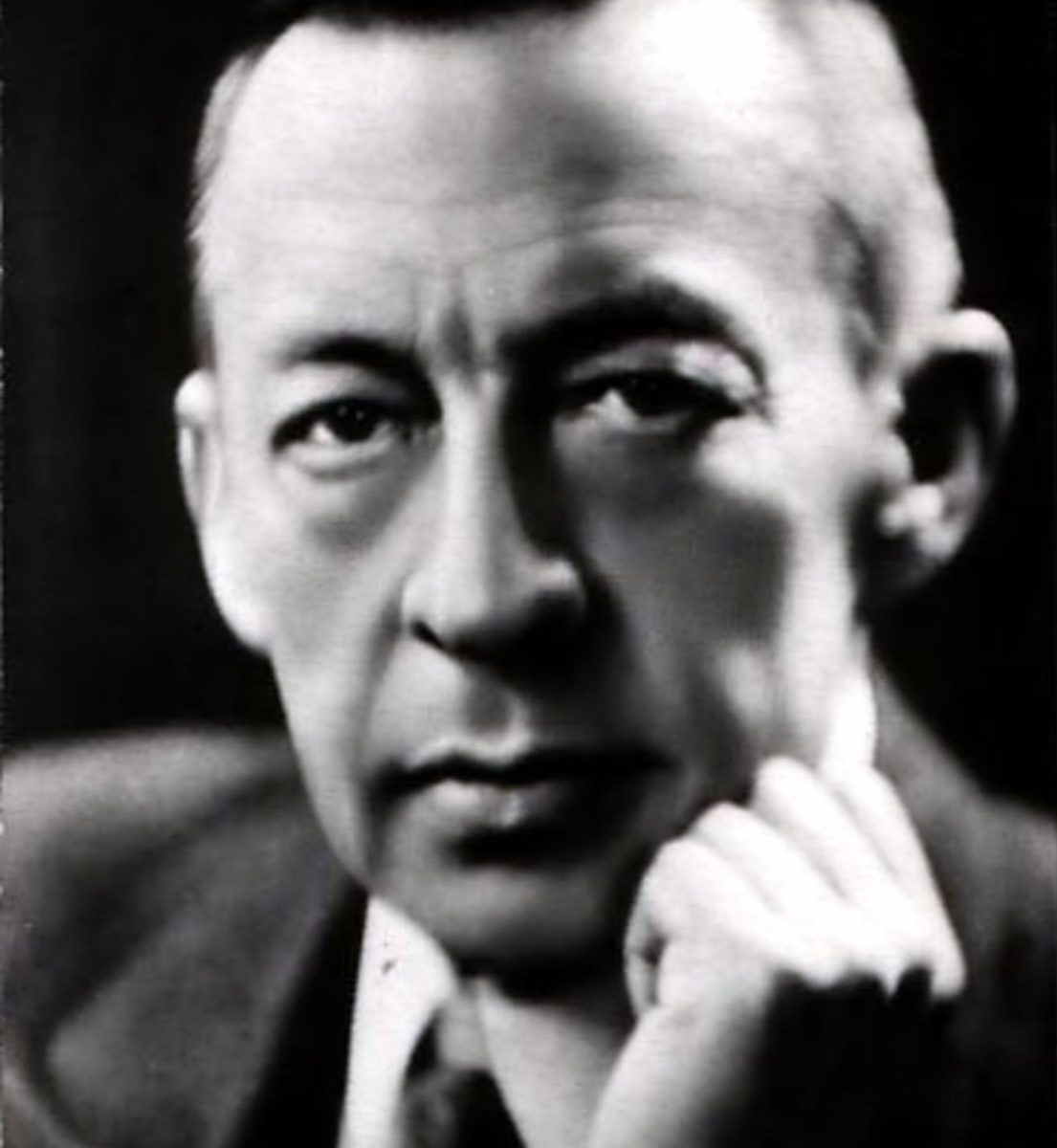
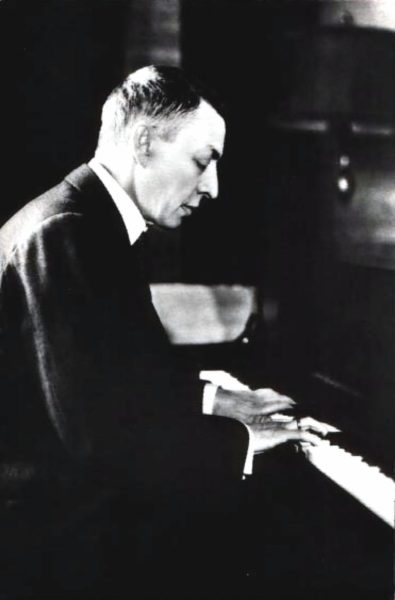
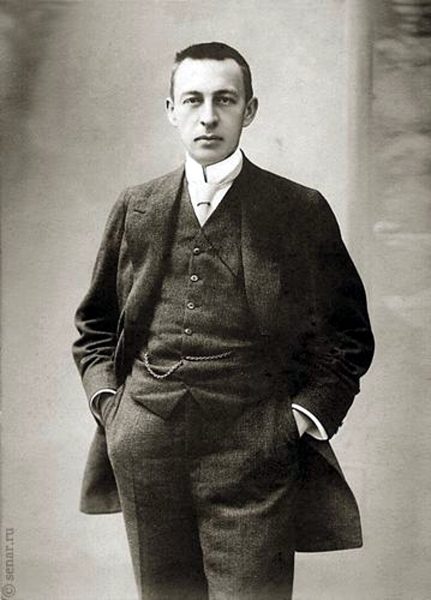
Sergei Rachmaninoff holds his place among the best known of Russian composers, and rightfully so, for his musical compositions are at the very heights of beautiful, timeless, moving and monumental. In this article, I want to introduce you to the great composer, Rachmaninoff himself, and to several of his most influential works.
Born in 1873, and dying in 1943, Rachmaninoff lived through a very tumultuous time in the history of the world, and of his native Russia. After having established a career as a prominent pianist and composer, he was forced to take his family and abruptly flee his homeland at the outbreak of the Bolshevik Revolution in 1917. Taking up residence in the United States, he never returned to Russia, yet through all his music flows the unique influence of the Russian style. Examined in this sense, Rachmaninoff’s musical life possesses a noticeable unity, with significant themes and ideas regularly revisited in symphonies, songs and other works.
Important Compositions.
The First Symphony:
First in order of importance when discussing Rachmaninoff’s musical works are his three symphonies. Each one is a priceless treasure, but I will focus primarily on the First Symphony. It was, interestingly, forgotten for several years, as it was lost when Rachmaninoff left Russia. Only in 1944 were experts able to reconstruct the masterpiece from an incomplete set of parts which was still surviving. In complete form, this symphony is amazingly grand, passionate and sweeping, and makes for excellent music to enjoy while studying or reading.
“Vespers” or “All-Night Vigil”:
This significant composition for large choir is made of 15 movements, and generally lasts over an hour. In form, it is a religious work, and is, in fact, made mainly of Byzantine and Orthodox hymns. This pristine and emotionally moving piece has famously been called “one of the most beautiful pieces of music ever composed” (Fr. Michael Gaitley, The One Thing is Three). Notably, it was also used as the soundtrack for Saint Luke Production’s The Gospel According to John.
Rhapsody on a Theme of Paganini:
Based on the 24th of Niccolò Paganini’s “24 Caprices” for violin, Rachmaninoff’s “Rhapsody on a Theme of Paganini” is one of the most rewarding pieces for piano and orchestra. Full of energy and lively fury, this piece constantly stuns audiences through each of its 24 variations. Clearly, Rachmaninoff, one of the world’s best pianists, put more than usual care into this piece. The original theme is presented, and then transformed in a breathtaking whirlwind of virtuosic variations. Perhaps variation 18 is the most famous, with its heart-wrenching melody and superbly handled string accompaniment. To my ear, however, variation 15 sounds the most difficult and technically complex. Finally, near the end, in variation 24, Rachmaninoff throws in the ancient chant melody of the Dies Irae, a tune with which he always had a fascination, and which he incorporated into many of his best works.
Symphonic Dances:
In the Symphonic Dances— the piece which Rachmaninoff called his “last creative spark”— is displayed with all the grandeur and power of Rachmaninoff’s composing career. This three-part work was written in 1941, and originally conceived to be an interpretive ballet. Ultimately, it was never choreographed, but regardless, it has remained one of the most iconic works of the Rachmaninoff repertoire. Requiring intense skill from every section of the orchestra— and even briefly featuring a piano, which is not usually featured in such orchestral works— I like to see this dramatic piece as a recapitulation and synthesis of Rachmaninoff’s whole life. In it, in fact, he “quotes” musical passages from several of his previous works, including the First Symphony, the All-Night Vigil, and others. In keeping with his compositional genius, Rachmaninoff also incorporates the Dies Irae, in the resounding climax of the third section.
As a devoted aficionado of the great works of Russian music in general, and of Rachmaninoff’s music in particular, I especially recommend the four works examined in this article. Beyond these, however, many more priceless treasures wait to be discovered. With the introduction provided by these four, I hope you will find enjoyment and edification, and perhaps gain an appreciation for Sergei Rachmaninoff, the greatest master of the late-romantic musical style.